
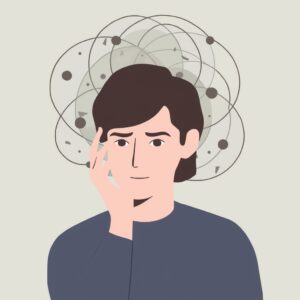
WHEN THINKING BECOMES A SOURCE OF STRESS INSTEAD OF CLARITY
Overthinking usually begins as an attempt to stay safe.
Replaying conversations.
Anticipating outcomes.
Trying to prevent mistakes.
But when thinking never settles, anxiety begins to rise — not because you’re weak, but because the mind is working overtime.
OVERTHINKING IS A COPING STRATEGY, NOT A FLAW
The brain overthinks to reduce uncertainty.
It’s an effort to gain control, avoid regret, and prepare for what might go wrong.
The problem isn’t thinking — it’s the constant urgency behind it.
HOW OVERTHINKING ACTIVATES ANXIETY IN THE BODY
Thoughts don’t stay abstract.
They activate the nervous system:
- Increased heart rate
- Shallow breathing
- Muscle tension
- Difficulty sleeping
Even imagined scenarios can trigger physical stress responses, because the body responds to perceived threat — not reality.
WHY “JUST STOP THINKING” BACKFIRES
Trying to suppress thoughts increases their intensity.
The mind reacts to pressure by pushing harder — not calming down.
This is why telling yourself to “stop overthinking” often increases anxiety rather than reducing it.
REFLECTION VS RUMINATION
Reflection leads to insight.
Rumination loops without resolution.
A simple distinction:
- Reflection feels grounding
- Rumination feels urgent
When clarity stops emerging, the system is no longer solving — it’s protecting.
WHAT ACTUALLY HELPS THE MIND SETTLE
The mind settles when the body feels less responsible for danger.
This happens through:
- Allowing thoughts to pass
- Reducing the need for certainty
- Shifting from analysis to observation
Calm doesn’t come from answers.
It comes from safety.
A related book you may find helpful
If this essay resonated with you, these ideas here are explored more deeply in the following book.
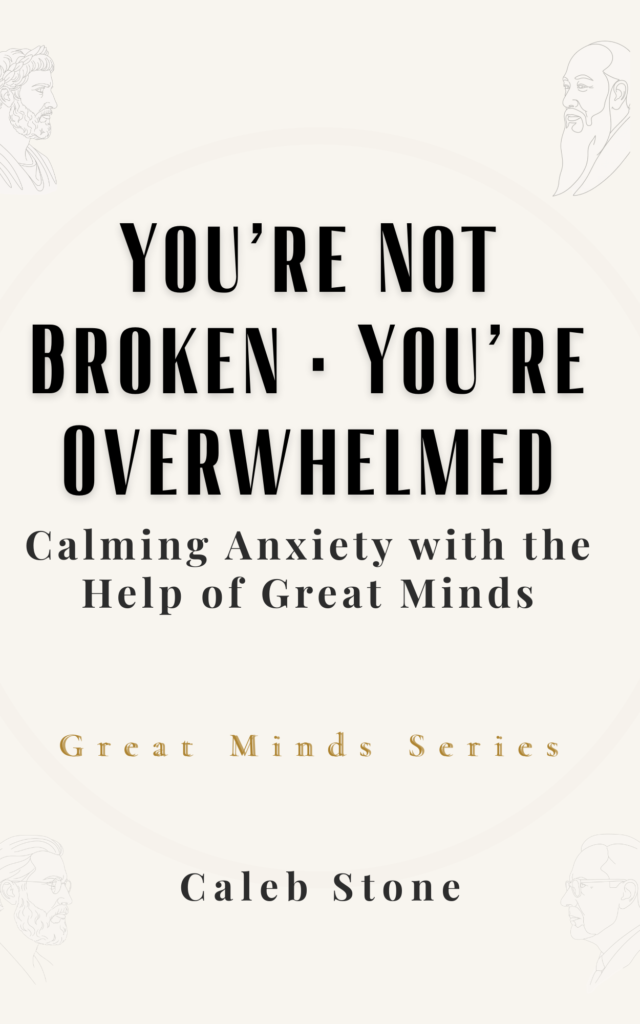
You’re Not Broken — You’re Overwhelmed
A calm, psychology-informed exploration of anxiety as a nervous-system response — guided by modern science and the wisdom of great minds.
Some people prefer to read slowly and privately. If that’s you, you can subscribe here.
Some readers like following along on Facebook for shorter notes between articles.