

Why constant self-monitoring can quietly exhaust the mind — and keep the body on edge
Self-awareness is usually praised as a strength.
It’s something thoughtful people work toward.
Something encouraged in therapy, reflection, and personal growth.
Something that’s supposed to lead to clarity.
But for many people, awareness doesn’t stay gentle.
It turns into something heavier — a constant watching, checking, noticing — until it becomes hard to rest inside your own mind.
Self-Awareness Is Usually a Strength
At its best, self-awareness helps people pause before reacting.
It helps them understand patterns, communicate better, and grow.
Many people develop it during difficult seasons — after stress, loss, conflict, or emotional overwhelm. Awareness becomes a way to make sense of what happened.
And at first, it helps.
You notice your thoughts.
You track your reactions.
You become more intentional.
But over time, something subtle can shift.
When Awareness Turns Into Self-Surveillance
There’s a difference between noticing and monitoring.
Noticing is light.
Monitoring is constant.
Monitoring sounds like:
- Why did that thought come up?
- Am I calm enough yet?
- What does this reaction say about me?
- Should I feel better by now?
Instead of awareness creating space, it starts creating pressure.
The mind never fully relaxes — because it feels watched.
Even when nothing is “wrong,” something feels unsettled.
This isn’t a failure of insight.
It’s an overextension of it.
Why the Mind Starts Watching Itself
Long before modern language existed for anxiety or nervous systems, great thinkers noticed something important:
Attention sharpens when safety feels uncertain.
Across philosophy, early medicine, and modern science, the same pattern appears again and again — when the system doesn’t trust what comes next, awareness increases.
The mind scans.
It reviews.
It checks itself.
Not because it’s broken — but because it’s trying to protect.
Modern research echoes this idea: when the body stays in a state of alert, the mind compensates by staying vigilant. Thought becomes a form of guarding.
So the mind watches itself not out of obsession — but out of responsibility.
The Hidden Cost of Constant Awareness
The cost isn’t obvious at first.
It shows up quietly:
- mental fatigue without clear cause
- difficulty relaxing, even during calm moments
- feeling “on” all the time
- a sense that peace never fully lands
People often assume they need more insight to fix this.
But the problem isn’t lack of understanding.
It’s that the system never learned it was allowed to stand down.
This kind of awareness doesn’t feel like anxiety in the dramatic sense.
It feels like effort.
Why This Often Gets Mistaken for “Anxiety”
Anxiety is usually described as fear, worry, or panic.
But for many people, anxiety is something subtler:
sustained attention without relief.
It’s the mind staying engaged long after the original stress has passed.
Great minds across history understood this distinction. They didn’t define distress only by fear — but by tension that never resolves.
Modern science now confirms what they observed intuitively: when alertness becomes chronic, the body doesn’t reset just because circumstances improve.
That’s why reassurance often doesn’t work.
That’s why insight alone doesn’t bring rest.
Understanding helps — but it isn’t the end of the story.
Some thoughts don’t ask for solutions.
They ask for time.
That’s what the Great Minds Series newsletter is —
quiet reflections sent occasionally, without urgency.
(You’re welcome to join if you’d like.)
Awareness Without Safety Never Fully Settles
Here’s the part that’s often missed:
Awareness doesn’t create safety. Safety allows awareness to soften.
You can understand yourself deeply and still feel on edge.
You can name every pattern and still feel watched inside your own mind.
Because safety isn’t a thought.
It’s a state the body learns over time.
Ancient thinkers described this as steadiness.
Modern science describes it as regulation.
Different language — same insight.
Until the system feels safe, awareness stays active.
Why Trying to “Fix” This Often Makes It Worse
When awareness becomes exhausting, people usually respond in one of two ways:
- they try to control their thoughts
- or they criticize themselves for not being calmer
Both keep the system activated.
Great minds warned about this centuries ago: effort applied in the wrong direction reinforces the very tension it’s meant to resolve.
Modern research agrees — pressure tells the nervous system that something is still wrong.
Which is why many people feel stuck:
- doing all the “right” things
- understanding themselves well
- yet never feeling settled
This isn’t because they’re failing.
It’s because understanding alone doesn’t teach safety.
Continue This Line of Thought
The ideas on this page are part of a larger exploration of how the mind learns when it is safe to stop performing — guided by modern science and the wisdom of great thinkers.
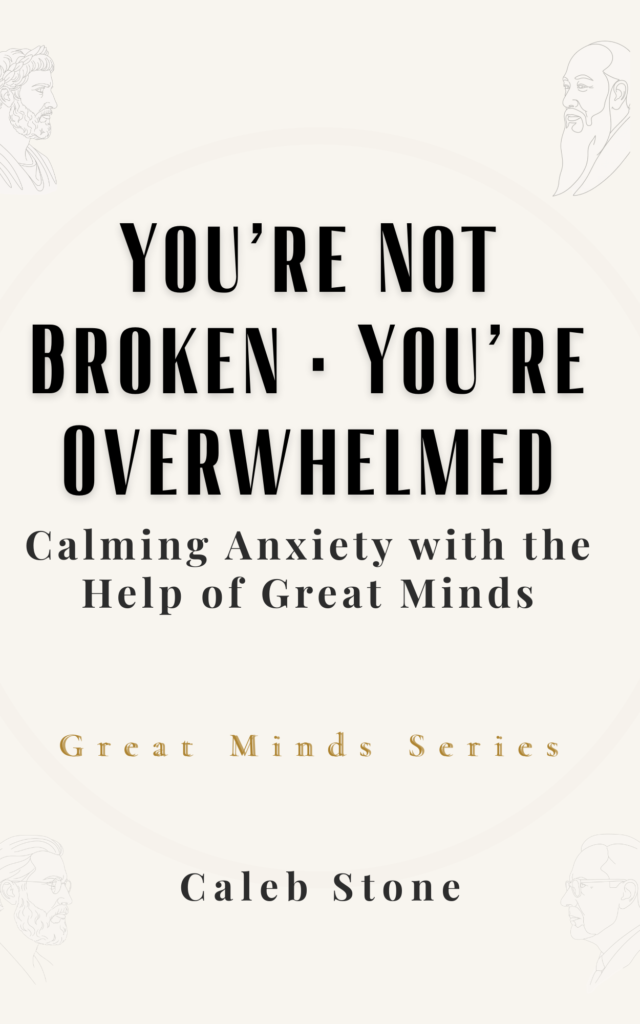
You’re Not Broken — You’re Overwhelmed
A calm, psychology-informed exploration of anxiety as a nervous-system response — guided by modern science and the wisdom of great minds.
If this article stayed with you longer than you expected, this is where it continues.
Some thoughts don’t need more explanation.
They need time.
This is where I write when an article ends
but the reflection doesn’t.
No urgency.
No fixing.
Just quiet notes for people who think deeply
and don’t want to rush past what they’re feeling.
Great Minds Series Newsletter
(sent occasionally, only when there’s something worth saying)
Some readers like following along on Facebook for shorter notes between articles.