

WHEN YOUR BODY LEARNED TO STAY ALERT
Many people believe their anxiety comes from worrying too much.
They assume the problem is that they:
- overthink
- stress too easily
- feel overwhelmed by small things
But in many cases, something else is happening.
Their nervous system learned to operate in survival mode.
When the body spends years preparing for stress, it doesn’t automatically relax just because life becomes calmer.
Instead, it stays alert.
Scanning.
Preparing.
Waiting for the next disruption.
If your nervous system has spent a long time in survival mode, some of the following signs may feel very familiar.
1. You Struggle to Relax — Even When Life Is Calm
One of the most confusing experiences for people stuck in survival mode is that calm moments don’t feel peaceful.
They feel uncomfortable.
Even when nothing urgent is happening, the body may remain tense.
Many people describe feeling:
- restless
- mentally alert
- unable to fully settle
Instead of enjoying quiet moments, their mind begins searching for what might go wrong.
This happens because their nervous system learned a pattern earlier in life:
Calm moments often didn’t last.
So the body stayed prepared.
2. Your Mind Constantly Scans for Problems
Many people stuck in survival mode notice their mind rarely shuts off.
They replay conversations.
They analyze small interactions.
They imagine potential future problems.
This pattern often gets labeled as overthinking.
But from the brain’s perspective, it’s preparation.
If unpredictable situations happened often in the past, the mind learns to stay ahead of possible threats.
Even when life becomes more stable, the scanning habit may continue.
3. Small Stressors Can Feel Overwhelming
Another common sign of survival mode is that everyday stress can feel surprisingly intense.
Small problems may suddenly drain a large amount of energy.
Tasks that seem manageable for others may feel exhausting.
This happens because a nervous system that is constantly alert already carries a high level of tension.
When new stress appears, the system has very little remaining capacity to absorb it.
The result isn’t weakness.
It’s a nervous system that has been working overtime for years.
4. You Feel Responsible for Other People’s Emotions
Many people who grew up in emotionally unpredictable environments learned to monitor the moods of others.
They became skilled at sensing emotional shifts.
As adults, this often appears as:
- people pleasing
- avoiding conflict
- trying to keep everyone comfortable
- feeling responsible for calming tension
This behavior often started as a survival strategy.
When a child learns that emotional stability depends on the mood of others, they naturally begin trying to manage that environment.
Over time, that habit can become automatic.
Continue This Line of Thought
The ideas on this page are part of a larger exploration of how the mind learns when it is safe and how to learn to feel safe — guided by modern science and the wisdom of great thinkers.
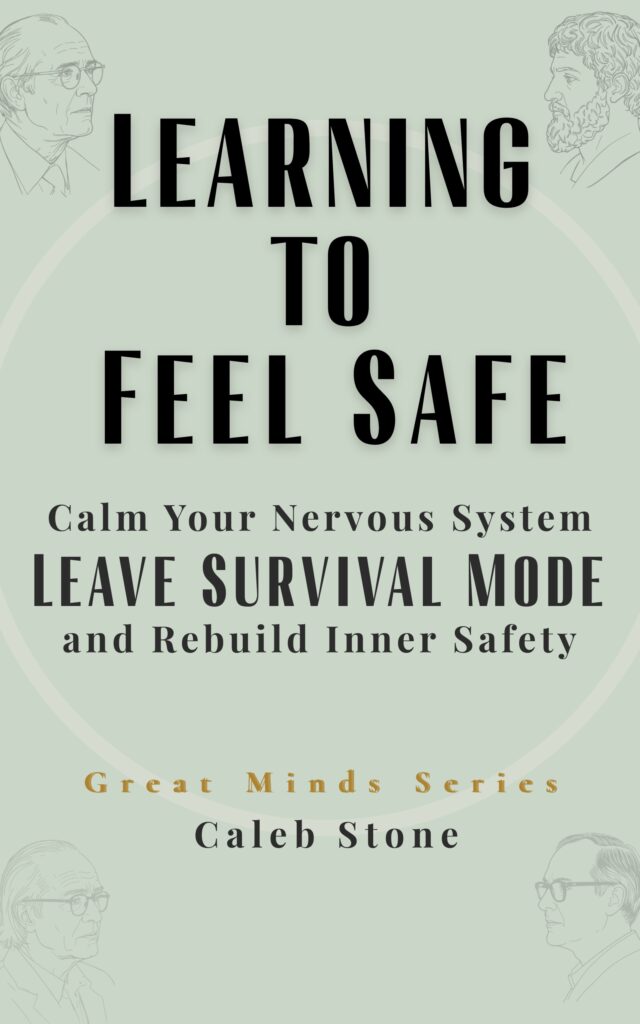
Learning to Feel Safe
For many people, the hardest realization is that their anxiety isn’t simply about worrying too much — it’s about a nervous system that never learned how to fully feel safe. When the body has spent years preparing for stress, calm can feel unfamiliar or even uncomfortable. I explore this idea more deeply in my book Learning to Feel Safe, where I explain why survival mode develops and how people can slowly teach their nervous systems to recognize safety again.
5. Rest Doesn’t Always Restore You
Many people assume rest should fix stress.
But individuals stuck in survival mode often notice something frustrating.
Even when they take time off, they may still feel mentally tense.
They might:
- sleep more
- take vacations
- reduce responsibilities
And yet the sense of pressure doesn’t fully disappear.
This happens because rest alone doesn’t change a nervous system that still expects danger.
Until the body begins to feel safe again, it may stay partially alert.
6. You Quietly Expect Something to Go Wrong
Another sign of survival mode is the quiet expectation that good moments won’t last.
Even when life feels stable, part of the mind prepares for disruption.
This may show up as thoughts like:
- “Something will probably ruin this.”
- “This calm won’t last.”
- “Something bad will happen soon.”
These thoughts don’t mean someone is negative.
They often reflect a nervous system that spent years preparing for sudden change.
7. Calm Can Actually Make You Anxious
Perhaps the most surprising sign of survival mode is that calm environments can feel uncomfortable.
Silence may feel strange.
Stillness may create restlessness.
Moments without urgency can trigger subtle tension.
This happens because the nervous system becomes used to constant activity and alertness.
When those signals disappear, the body sometimes interprets the quiet as unfamiliar — or even unsafe.
Calm may feel unsettling simply because the system hasn’t experienced it consistently enough.
CONCLUSION
Many people believe something is wrong with them.
They assume they are:
- overly anxious
- overly sensitive
- unable to handle stress
But often the issue isn’t weakness.
It’s adaptation.
Their nervous system learned how to survive environments where emotional safety was uncertain.
Those patterns can continue long after the original situation has passed.
Understanding this can change something important.
Instead of blaming yourself for how your mind and body react, you begin to see the deeper reason behind those responses.
And when that understanding grows, it becomes possible to start teaching the nervous system something new:
what it feels like to be safe again.
Some people prefer to read slowly and privately. If that’s you, you can subscribe here.
If this article stayed with you longer than you expected, this is where it continues.
Some thoughts don’t need more explanation.
They need time.
This is where I write when an article ends
but the reflection doesn’t.
No urgency.
No fixing.
Just quiet notes for people who think deeply
and don’t want to rush past what they’re feeling.
Great Minds Series Newsletter
(sent occasionally, only when there’s something worth saying)
Some readers like following along on Facebook for shorter notes between articles.