

WHAT YOU CALL “IRRITABILITY” MIGHT BE LONG-TERM SELF-EDITING FATIGUE
You don’t actually hate people.
You just feel drained around them.
You find yourself thinking:
- “Why do I have to explain this again?”
- “Why do I always soften myself?”
- “Why does being around people feel like work?”
Then the guilt comes.
You tell yourself you’re becoming negative. Detached. Antisocial.
But what if the exhaustion isn’t about people?
What if it’s about how much of yourself you’ve been adjusting just to stay comfortable in the room?
THE INVISIBLE WORK OF BEING “EASY TO BE AROUND”
Some people walk into a room and simply exist.
Others walk in and immediately start calibrating.
You may not even notice it happening:
- Adjusting your tone.
- Softening your opinions.
- Filtering reactions.
- Explaining your intent before someone misreads it.
- Clarifying yourself to avoid conflict.
This isn’t manipulation.
It’s self-monitoring.
And it’s exhausting.
WHEN SELF-EDITING BECOMES YOUR DEFAULT MODE
If you grew up in environments where being misunderstood led to tension, conflict, or withdrawal, you likely learned to explain yourself early.
To stay safe, you:
- Clarified.
- Justified.
- Preempted criticism.
- Managed other people’s emotional reactions.
Over time, this becomes automatic.
You don’t just communicate.
You manage the room.
And that management costs energy.
WHY YOU FEEL IRRITABLE AFTER SOCIAL INTERACTION
After social time, you may feel:
- Unreasonably tired.
- Slightly resentful.
- Emotionally overstimulated.
- Eager to withdraw.
You might interpret this as social intolerance.
But it’s often self-suppression fatigue.
You weren’t just present.
You were performing regulation — for everyone.
When your nervous system has to track other people’s reactions constantly, it never fully relaxes.
YOU’RE NOT “TOO MUCH” — YOU’RE OVER-MANAGING
Many people who feel this way carry a quiet belief:
“If I don’t explain myself, I’ll be misunderstood.”
“If I don’t soften, I’ll seem aggressive.”
“If I don’t clarify, I’ll be rejected.”
So they over-communicate to stay safe.
The problem is not that you’re too intense.
The problem is that you’ve been pre-emptively shrinking to avoid discomfort.
That shrinking builds pressure.
Pressure turns into irritation.
Irritation gets misinterpreted as dislike.
Continue This Line of Thought
The ideas on this page are part of a larger exploration of how the mind learns when it is safe to stop performing — guided by modern science and the wisdom of great thinkers.
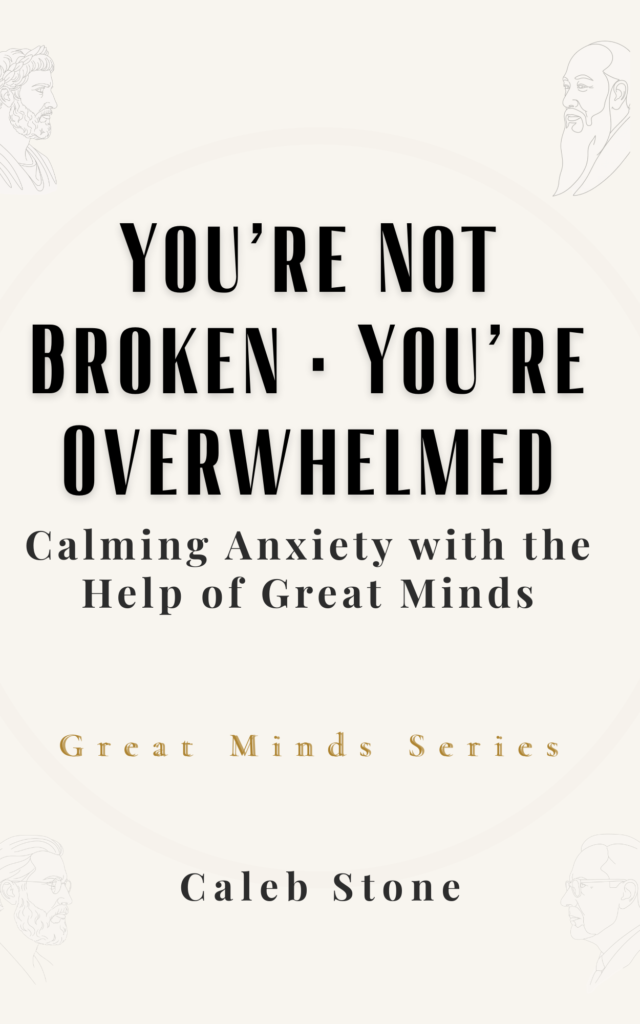
You’re Not Broken — You’re Overwhelmed
A calm, psychology-informed exploration of anxiety as a nervous-system response — guided by modern science and the wisdom of great minds.
WHY PULLING AWAY FEELS EASIER
Withdrawal isn’t always about avoidance.
Sometimes it’s the only place you don’t have to perform.
When you’re alone:
- You don’t have to explain your tone.
- You don’t have to anticipate reactions.
- You don’t have to justify your boundaries.
That relief can feel addictive.
Not because you dislike people — but because you’re tired of regulating yourself around them.
WHAT CHANGES WHEN YOU STOP OVER-EXPLAINING
The shift isn’t dramatic.
It’s subtle.
It looks like:
- Letting a pause exist.
- Not clarifying every sentence.
- Allowing someone to misunderstand slightly.
- Resisting the urge to fix how you’re perceived.
At first, this feels uncomfortable.
But over time, it restores energy.
Because authenticity uses less fuel than performance.
THE REAL ISSUE IS SAFETY, NOT PEOPLE
If being around others feels draining, ask:
Do I feel safe being unedited?
Not polite.
Not composed.
Not perfectly interpreted.
Unedited.
If the answer is no, your irritation makes sense.
It’s not dislike.
It’s depletion.
CONCLUSION
You don’t hate people.
You hate the constant self-management.
And the solution isn’t isolation.
It’s learning that you don’t have to explain yourself into belonging.
If this article stayed with you longer than you expected, this is where it continues.
Some thoughts don’t need more explanation.
They need time.
This is where I write when an article ends
but the reflection doesn’t.
No urgency.
No fixing.
Just quiet notes for people who think deeply
and don’t want to rush past what they’re feeling.
Great Minds Series Newsletter
(sent occasionally, only when there’s something worth saying)
Some readers like following along on Facebook for shorter notes between articles.