

WHAT YOU CALL “PROCRASTINATION” MIGHT BE A NERVOUS SYSTEM THAT NEVER GETS TO REST
You don’t need another productivity hack.
You don’t need a stricter morning routine.
You don’t need more discipline.
And you definitely don’t need to shame yourself harder.
If you constantly feel behind, unmotivated, or unable to start — there’s a strong chance you’re not lazy.
You’re tired in a way that sleep doesn’t fix.
And no one taught you the difference.
LAZINESS IS A MORAL LABEL — EXHAUSTION IS A PHYSIOLOGICAL STATE
Laziness implies character failure.
It suggests:
- You don’t care.
- You lack ambition.
- You’re avoiding responsibility.
Emotional exhaustion looks similar on the outside — but internally, it’s completely different.
Emotional exhaustion happens when your nervous system has been managing stress for too long without relief.
The result?
Low energy.
Low drive.
Low tolerance.
Not because you don’t want to act — but because your system has been in overdrive for years.
CHRONIC STRESS MIMICS “LACK OF MOTIVATION”
When the nervous system stays in survival mode, it prioritizes protection over progress.
This means:
- Starting feels overwhelming.
- Small tasks feel heavy.
- Decisions feel draining.
- Rest feels guilty instead of restorative.
From the outside, this looks like procrastination.
From the inside, it feels like trying to run on empty.
Your body isn’t refusing to work. It’s conserving energy.
Continue This Line of Thought
The ideas on this page are part of a larger exploration of how the mind learns when it is safe to stop performing — guided by modern science and the wisdom of great thinkers.
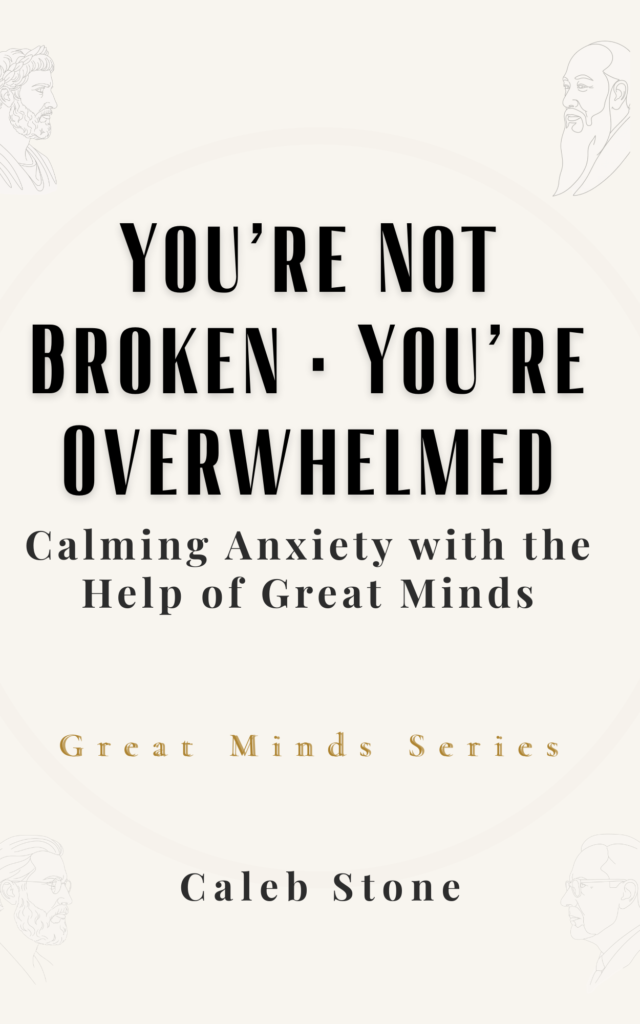
You’re Not Broken — You’re Overwhelmed
A calm, psychology-informed exploration of anxiety as a nervous-system response — guided by modern science and the wisdom of great minds.
HIGH-FUNCTIONING EXHAUSTION IS INVISIBLE
Here’s what makes this worse:
You might still be functioning.
You go to work.
You answer texts.
You show up for people.
But everything takes more effort than it should.
The exhaustion isn’t dramatic. It’s quiet. Chronic. Background.
And because you’re still operating, you assume the problem is discipline — not depletion.
WHY PUSHING HARDER MAKES IT WORSE
hen you call yourself lazy, you usually respond with pressure.
You:
- Double down.
- Make stricter rules.
- Increase self-criticism.
- Try to “force” productivity.
But pressure activates the stress response further.
A nervous system already stretched thin doesn’t respond to force with motivation. It responds with shutdown.
This is why after a period of intense self-discipline, you crash harder than before.
It’s not lack of willpower.
It’s nervous system backlash.
EMOTIONAL EXHAUSTION COMES FROM INVISIBLE LOAD
You may not be physically overworked.
But you could be:
- Constantly monitoring other people’s emotions.
- Overthinking every decision.
- Anticipating worst-case scenarios.
- Managing unresolved stress quietly.
Mental load consumes the same energy as physical exertion.
If your brain never feels safe enough to relax, your body never fully resets.
That is not laziness.
That is long-term activation without recovery.
THE DIFFERENCE BETWEEN AVOIDANCE AND DEPLETION
Avoidance says:
“I don’t want to.”
Depletion says:
“I can’t right now.”
One is resistance.
The other is capacity.
Most people misinterpret depletion as resistance — and punish themselves for something their body is signaling honestly.
When capacity increases, action becomes easier.
Not because you became stronger — but because you became safer.
WHAT ACTUAL REST LOOKS LIKE
Real rest is not scrolling.
It’s not collapsing in guilt.
It’s not distraction.
Real rest reduces pressure.
It involves:
- Removing urgency.
- Allowing incompletion.
- Letting your nervous system downshift.
This feels uncomfortable at first — because your system may not trust stillness.
But safety restores energy more effectively than force ever could.
CONCLUSION
If you’ve been calling yourself lazy, pause.
Ask a different question:
What has my nervous system been carrying?
Exhaustion masquerades as character flaws all the time.
You don’t need harsher self-discipline.
You need relief.
And relief is not weakness.
It’s regulation.
If this article stayed with you longer than you expected, this is where it continues.
Some thoughts don’t need more explanation.
They need time.
This is where I write when an article ends
but the reflection doesn’t.
No urgency.
No fixing.
Just quiet notes for people who think deeply
and don’t want to rush past what they’re feeling.
Great Minds Series Newsletter
(sent occasionally, only when there’s something worth saying)
Some readers like following along on Facebook for shorter notes between articles.